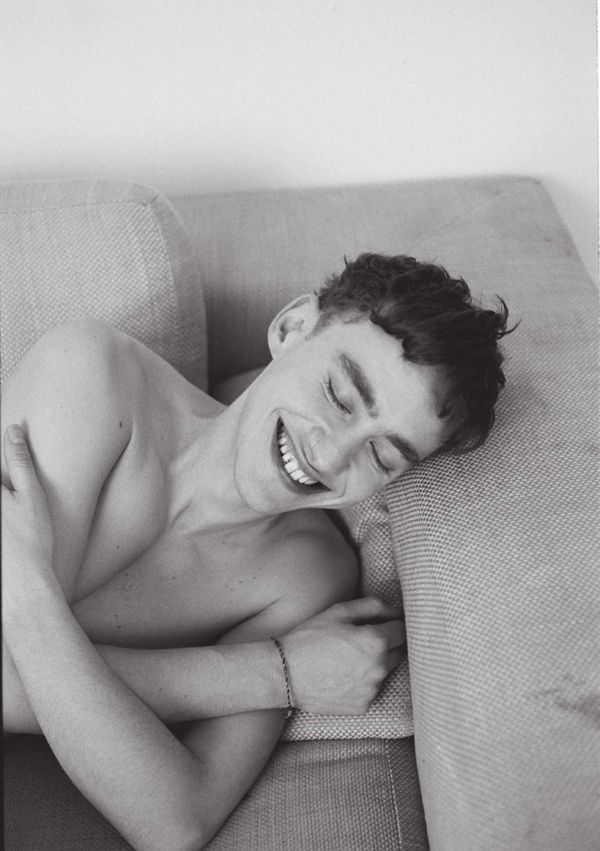
BEAT: You’ve always been outspoken about mental health and sexuality. How does it feel to have those conversations become a big part of your public identity?
OLLY ALEXANDER: It’s kind of strange, because when I first started talking about mental health or being gay, it was just because that’s what people asked me about. And then it became this thing that people expected me to speak about, which is fine because I do care a lot about those issues. But sometimes it’s hard, because it feels like people only want to talk about those parts of me, and not necessarily the music or the other things that I do.
BEAT: Do you ever wish you could separate the two — your activism and your artistry?
OLLY: I don’t know if I’d want to separate them completely, because they are both a big part of who I am. But there are times when I’d like to just exist as a musician, without it being politicised. Being queer is political whether I like it or not, but sometimes I just want to sing a pop song and not have to think about what it means for representation or visibility. You know?
BEAT: The last few years have seen you fronting Years & Years as a solo project. How has that transition been?
OLLY: It was weird at first, but it felt natural. The band had kind of run its course as a trio. We still love each other, but our goals were different. I realised that I wanted to keep pushing the project forward, and they were in different places in their lives. So it just made sense for Years & Years to become my thing, really. It’s been liberating in a way, because I can make the decisions I want to make creatively.
BEAT: You’ve also acted again recently. How was it returning to that world after everything with Years & Years?
OLLY: It was really emotional, actually. Acting is something that’s always been close to my heart. When I did “It’s A Sin,” it felt like the right project at the right time. I was terrified because I hadn’t acted in years, but that story — about love, shame, resilience — it hit so close to home. And I think a lot of people felt that too. It reminded me why I wanted to be an artist in the first place — to tell stories that mean something.
BEAT: That show touched so many people. What was it like to live in that world for so long during filming?
OLLY: It was intense. We filmed during a pandemic, so that added another layer of emotion and fear. But the cast became like family, honestly. There were days when it was really heavy — the AIDS crisis, the loss, the injustice — but there was so much love on that set. I cried so much during and after filming. It changed me in ways I’m still figuring out.
BEAT: You’ve talked before about fame being overwhelming. How do you find balance now?
OLLY: I’ve learned to say no more often. When Years & Years first took off, I said yes to everything — every interview, every appearance. I wanted to make everyone happy. But that just burned me out. Now I try to protect my time and my energy. I meditate, I spend time with friends, and I go to therapy. I’m not great at balance, but I’m learning.
BEAT: What’s been inspiring you musically lately?
OLLY: I’ve been listening to a lot of house and disco again — stuff that makes me want to dance. I think after the last few years, I’ve been craving joy. My new music is still emotional, but it’s wrapped up in this euphoric, sweaty dance floor energy. Like, sadness you can dance to. That’s the vibe.
BEAT: Your performances always feel joyful and freeing. How do you find that confidence on stage?
OLLY: Oh my god, it’s taken years! I used to be so nervous I’d nearly throw up before going on. But something clicked a few years ago — I realised people weren’t there to judge me, they were there to feel something. So I started letting go, dancing like a maniac, being weird, being sexy, being gay — all of it. Now, being on stage is where I feel the most myself.
BEAT: Do you feel pressure to be a role model for queer fans?
OLLY: Sometimes. But I also think being imperfect is part of being a role model. I’m not trying to be anyone’s hero, I just want to be honest. I still make mistakes, I still get anxious and insecure. But I also think it’s powerful to show people that you can be all those things and still live fully, still create, still love yourself. That’s what I want to represent.
BEAT: What do you think the next chapter of your career looks like?
OLLY: I think I just want to keep creating things that feel exciting and honest. I’m working on new music right now, and I want it to be bold and unapologetically queer. I also want to act again, maybe even direct one day. Who knows? I’m trying to be open to whatever comes next. I don’t want to limit myself.
BEAT: If you could give your younger self one piece of advice, what would it be?
OLLY: Stop worrying so much about what people think. I spent so much time trying to make myself smaller, trying to fit in. But all the things that made me different ended up being the best parts of me. I’d tell him to be kinder to himself, to love himself sooner.
BEAT: What do you hope people take away from your music?
OLLY: I hope they feel less alone. That’s the most important thing for me. Whether it’s a sad song or a euphoric banger, I want people to feel seen. That’s the best part about music — it connects us. It makes the world feel a little less heavy.
Olly Alexander Interview by Peter Robinson